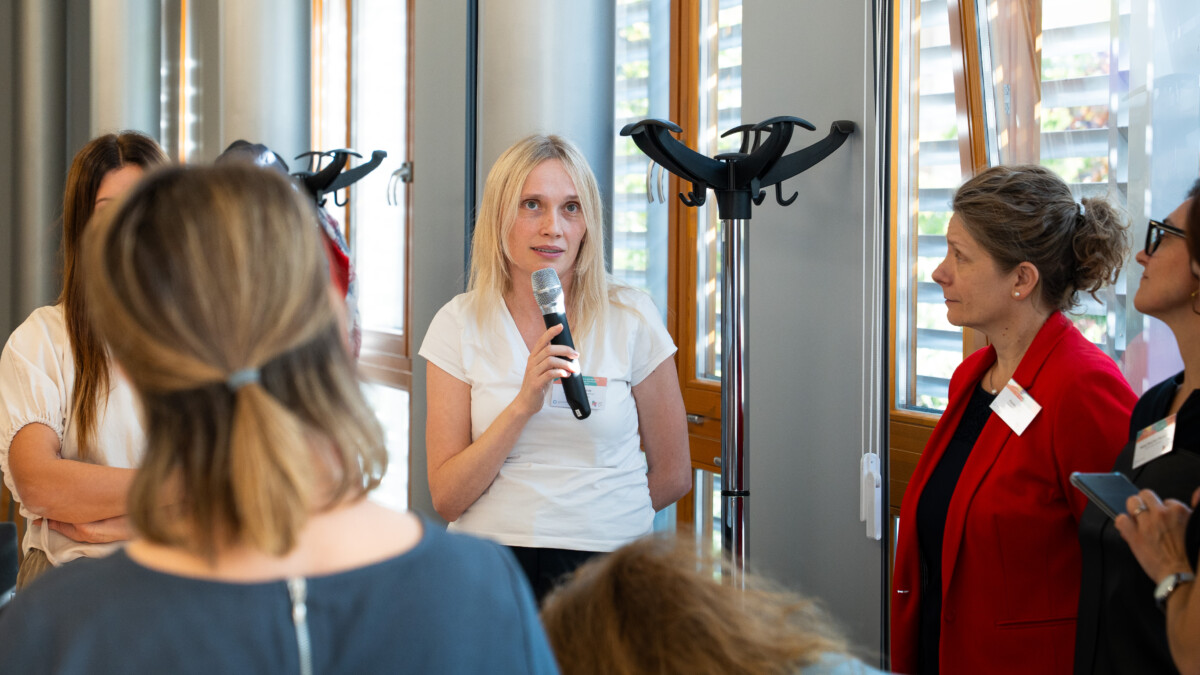
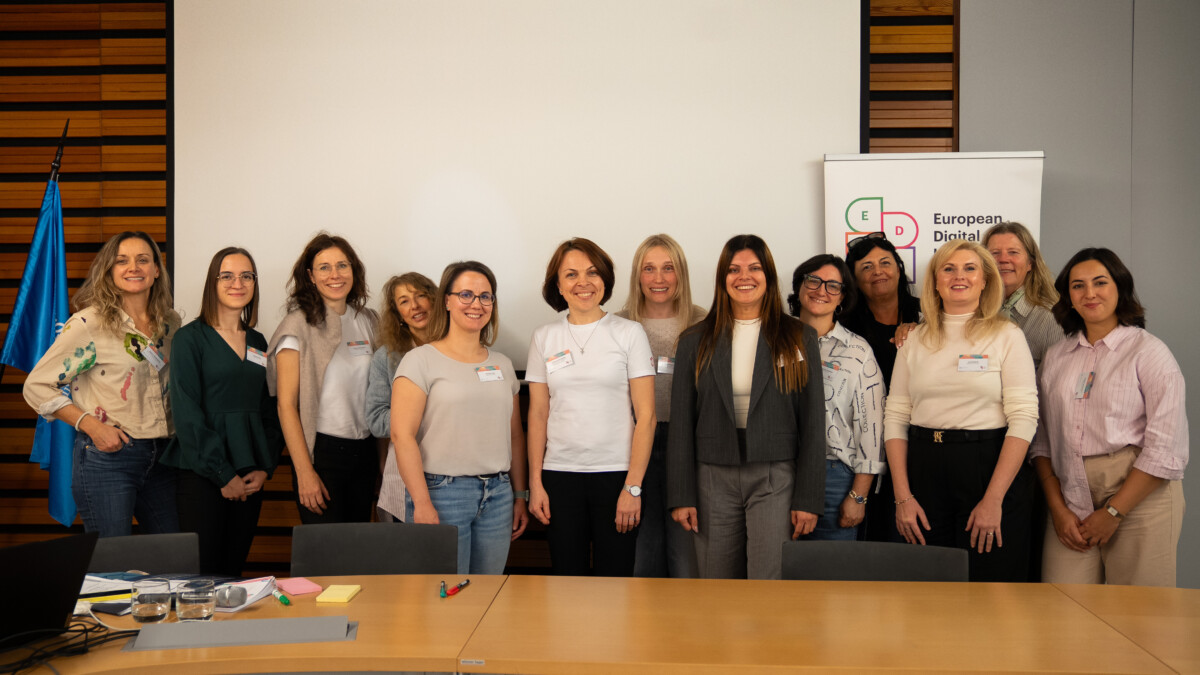
A two-day international meeting, “Joint CDEG & GEP Meeting and Knowledge Sharing Workshop,” took place at the University of Pécs (Hungary). The event brought together representatives of universities within the European EDUC alliance as part of the implementation of the EDUC-WIDE project.
The aim of the two-day meeting was to strengthen cooperation between European universities, exchange experience in supporting staff career development, actively implement Gender Equality Plans (GEPs), and seek practical solutions for creating a university environment in which equality, support, and respect for individual needs become integral components of institutional culture.
The first day of the workshop focused on practical tools for ensuring equal opportunities for higher education staff, developing career counselling, and establishing transparent and fair approaches to human resource management.
On 19 October, the meeting was moderated by Kateryna Fomin, Associate Professor at the Department of English Philology, leading specialist at the Project Management Office of Vasyl Stefanyk Carpathian National University, and leader of an EDUC-WIDE project task.
The participants were welcomed by Professor Katalin Füzér, EDUC-WIDE project coordinator at the University of Pécs, and Iryna Hryhoruk, Head of the Research Department, Associate Professor at the Department of Management and Business Administration, and EDUC-WIDE project coordinator at Vasyl Stefanyk Carpathian National University.
Representatives of Masaryk University, Iva Lízalová and Natálie Miklánková, shared their experience in developing a career counselling system for university staff. The discussion focused on practical mechanisms for supporting professional development and translating the university’s strategic objectives into concrete services and opportunities for employees.
Aina Enstad from the University of South-Eastern Norway presented approaches to moving from individual career initiatives towards systematic institutional practices. The discussion highlighted the importance of integrating staff professional development into the overall university management strategy.
Particular attention was paid to pay transparency in higher education. Csenge Láng, a representative of the University of Pécs, addressed contemporary approaches to ensuring remuneration transparency, fairness in pay systems, and prospects for their improvement in the university environment.
The first day concluded with a joint creative session facilitated by Claudia Dell’Uomo d’Arme from Paris Nanterre University. The session invited participants to explore gender equality through personal experience, language, identity, and academic solidarity. This approach complemented discussions of management mechanisms with a human-centred perspective, emphasising that people, their needs, dignity, and opportunities for self-realisation must remain at the heart of institutional policies.
The second day began with Tetiana Solodzhuk, Head of the Project Management Office, Associate Professor at the Department of Finance, and leader of an EDUC-WIDE project task.
Martina Cannone, a representative of the European Commission’s Directorate-General for Research and Innovation, delivered a presentation on the European policy context for advancing inclusive gender equality in research and innovation.
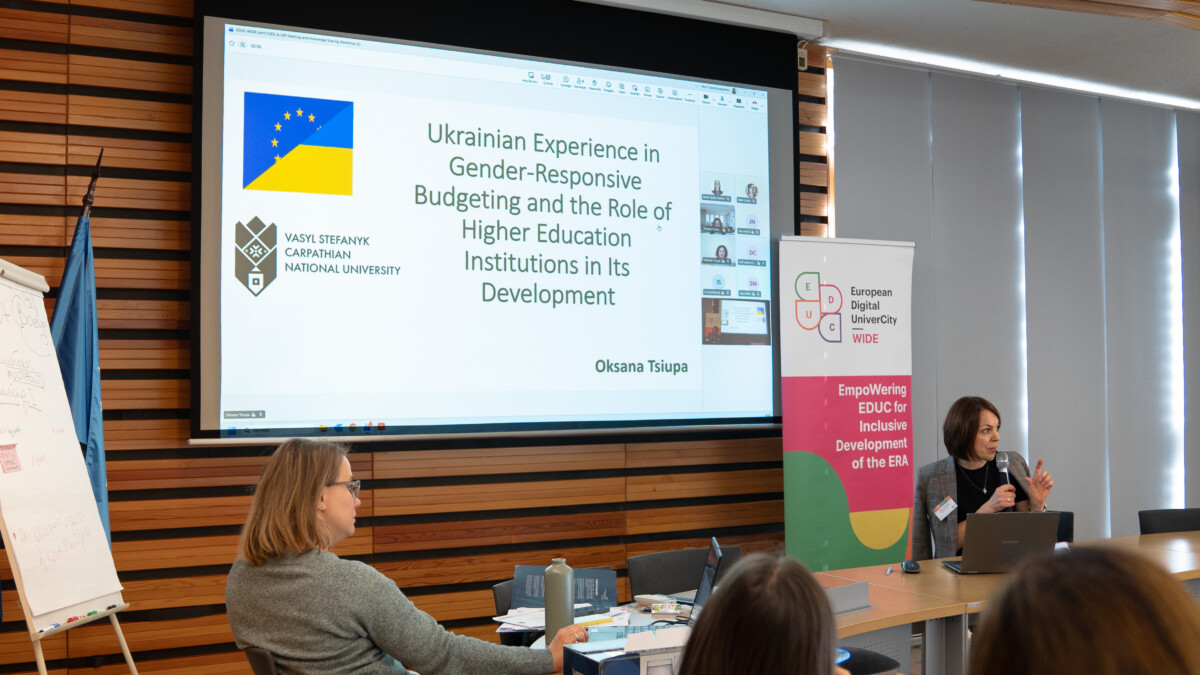
The Ukrainian experience of gender-responsive budgeting and the role of higher education institutions in its development were presented by Oksana Tsiupa, Associate Professor at the Department of Finance at Vasyl Stefanyk Carpathian National University and a national expert in public financial management and gender-responsive budgeting in Ukraine.
Participants also heard a presentation by Ester Cois, Professor at the University of Cagliari and President of the National Conference of Equality Bodies in Italian Universities. Her presentation focused on moving beyond the formal adoption of Gender Equality Plans towards genuine institutional change and the development of a culture of care.
A common theme running through the expert presentations was the understanding of gender equality not as a separate area of university policy, but as a cross-cutting principle of governance that should influence decision-making, resource allocation, professional opportunities, and the everyday life of the university community.
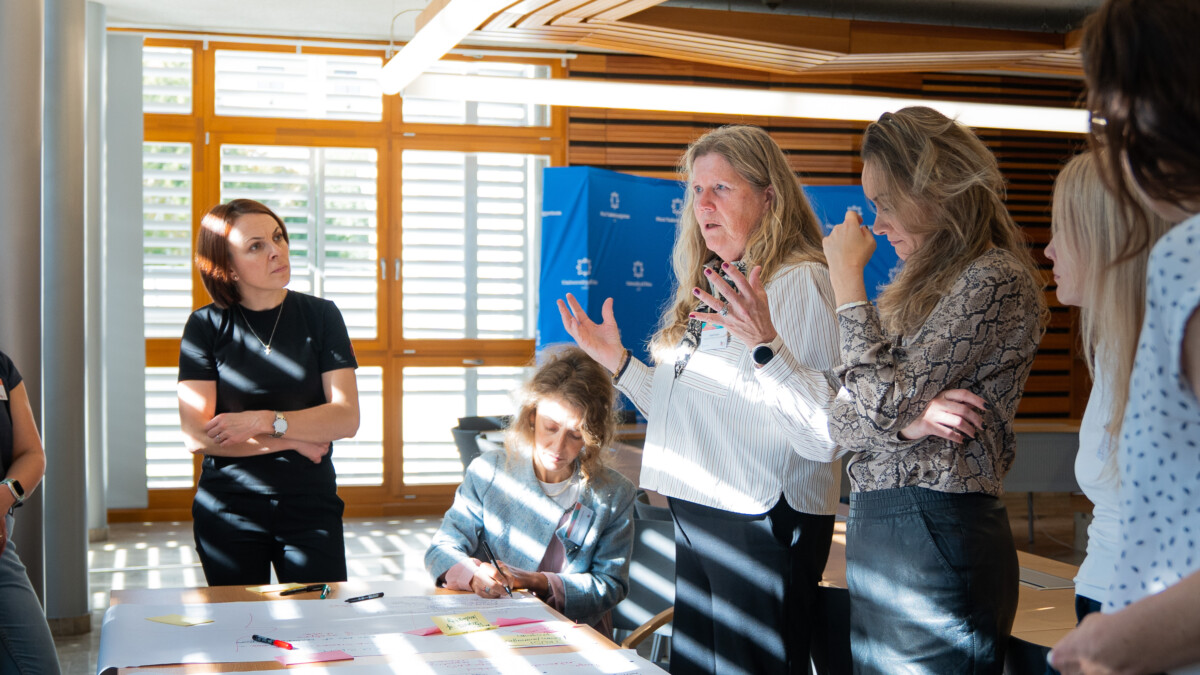
The central part of the second day was an interactive working session entitled “Gender Equality in Action: Building Inclusive, Supportive, and People-Centred Universities.” The session was jointly designed by Tetiana Solodzhuk and Claudia Dell’Uomo d’Arme, who also facilitated the participants’ work.
Instead of the traditional presentation format, participants were invited to jointly explore how gender equality principles are implemented across different universities and which institutional practices could be useful to other partners.
The participants worked on distinguishing between practices that could be relatively easily adapted, approaches requiring changes to institutional or regulatory frameworks, and shared principles that could be implemented by different universities while taking their specific characteristics into account.
For Vasyl Stefanyk Carpathian National University, contributing to the programme, participating in expert discussions, and facilitating collaborative work provided an opportunity not only to present the Ukrainian experience but also to make a direct contribution to the development of common European approaches to promoting gender equality in higher education.
The main conclusion of the workshop was that genuine gender equality begins when universities move beyond declarations and formal strategies towards concrete management decisions, institutional practices, and a culture of mutual respect, support, and responsibility.
The event was held as part of the EDUC-WIDE international project, funded by the European Union under the Horizon Europe programme.