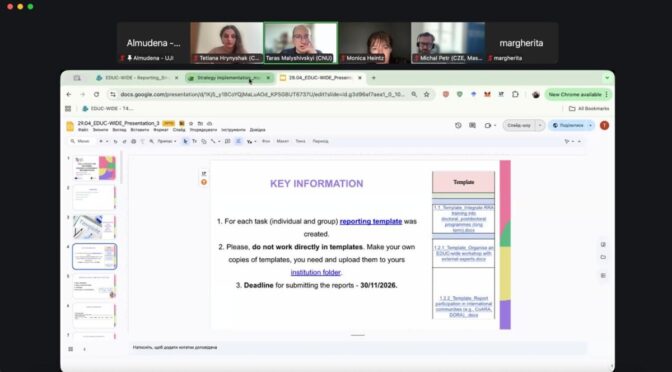
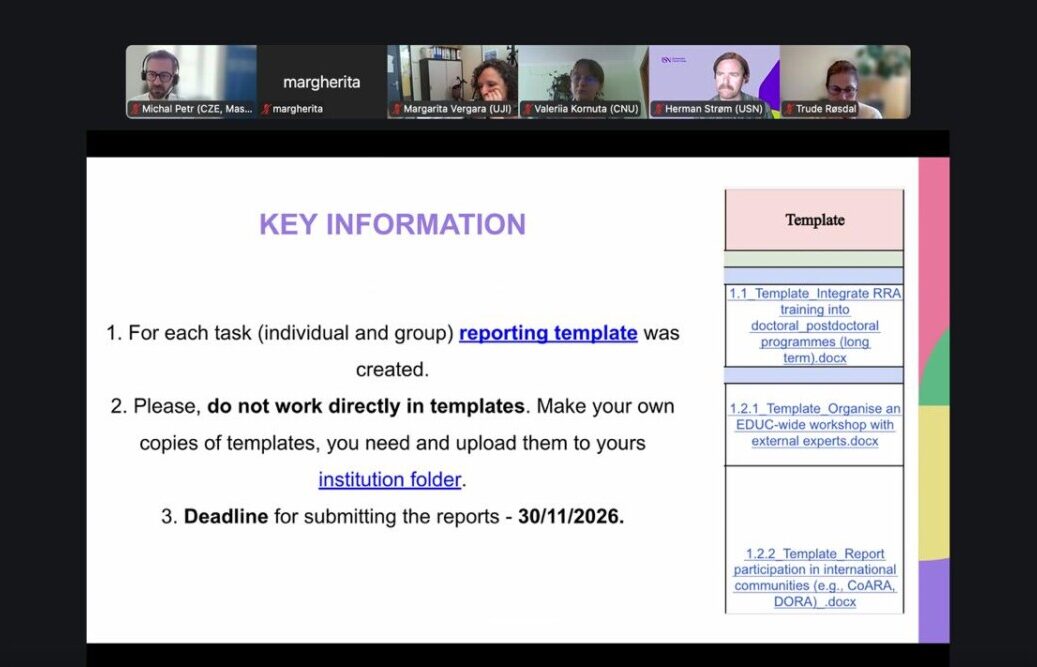
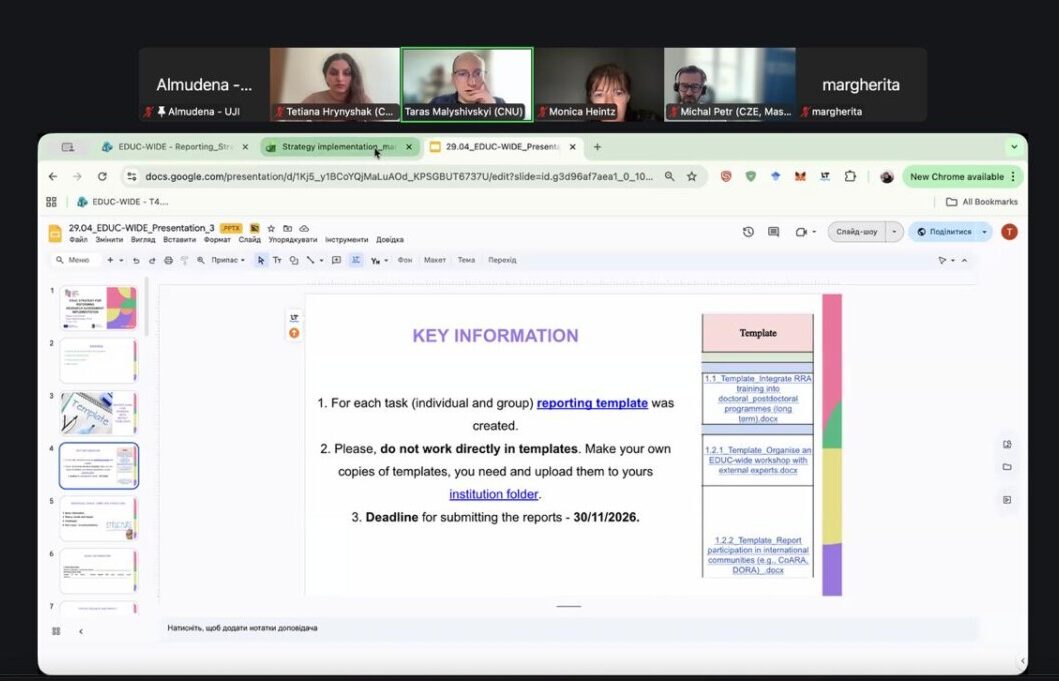
T4.1 Monitoring Meeting: implementing the EDUC Strategy for Reforming Research Assessment

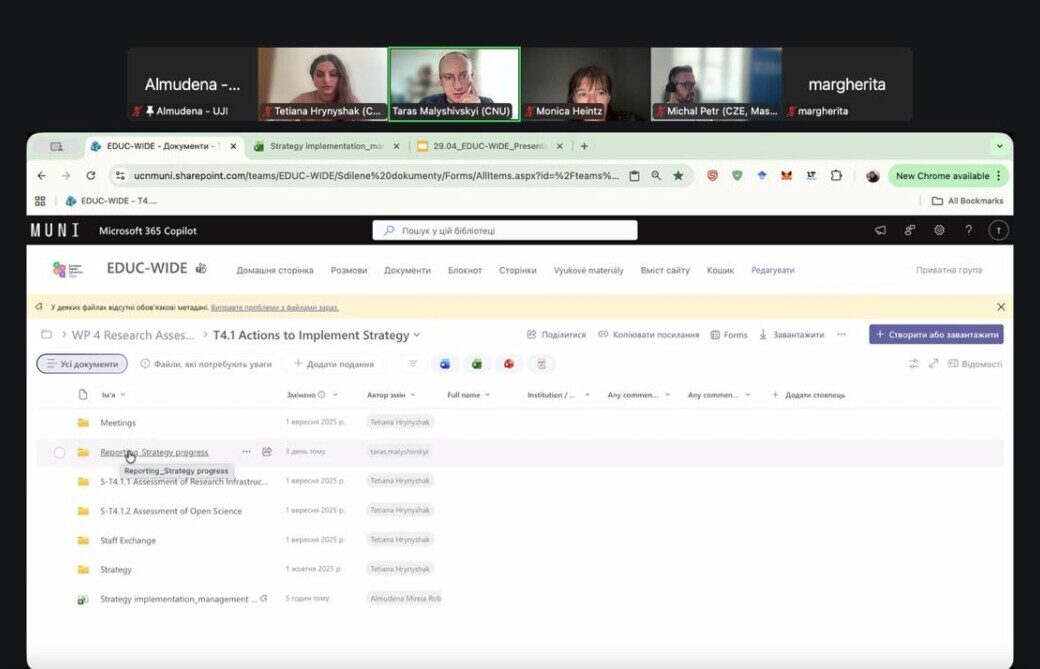
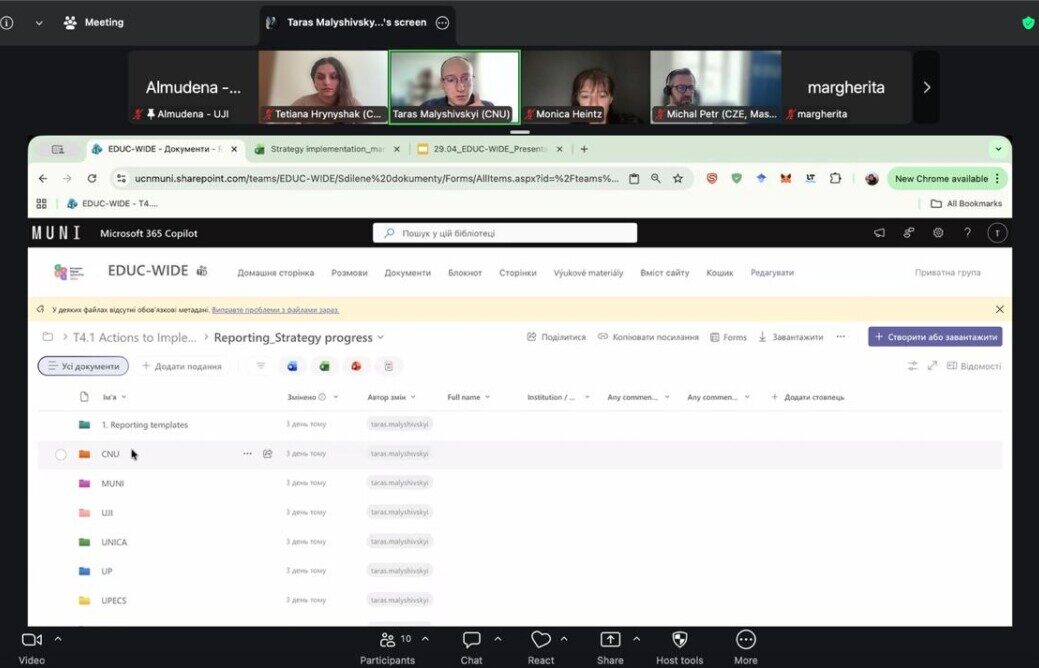
Within the EDUC-WIDE project, partners gathered for the T4.1 Monitoring Meeting to review progress in implementing the EDUC Strategy for Reforming Research Assessment across the alliance.

This task focuses on translating the jointly developed strategy into concrete institutional and systemic changes, including advancing reforms in research assessment in line with the EDUC framework and strengthening collaboration through the Research Assessment Expert Group (RAEG).

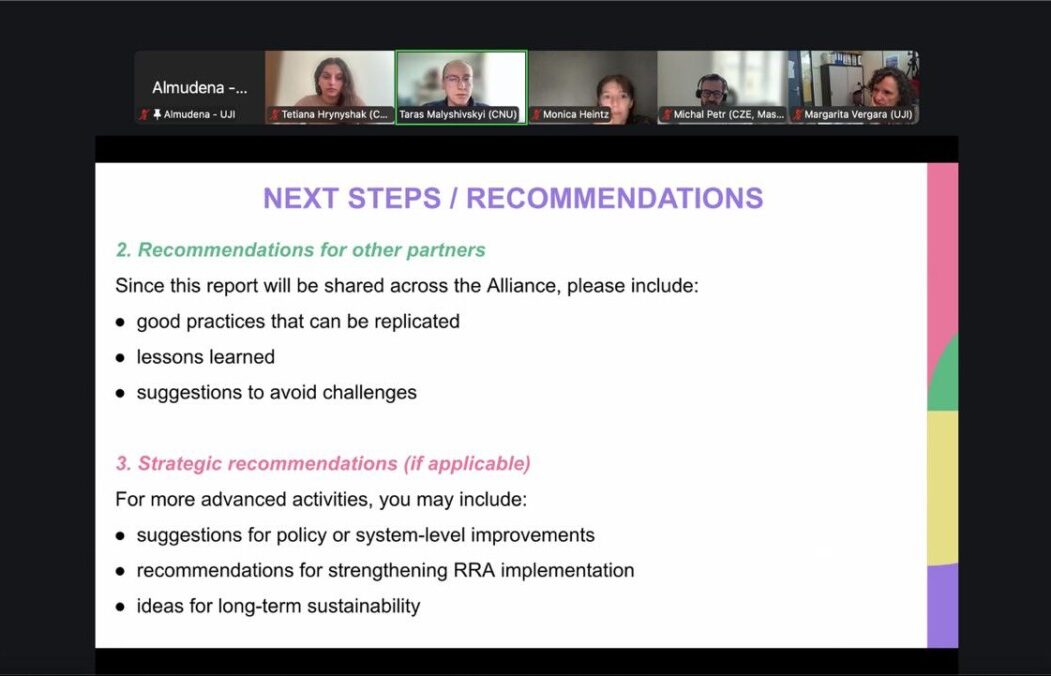
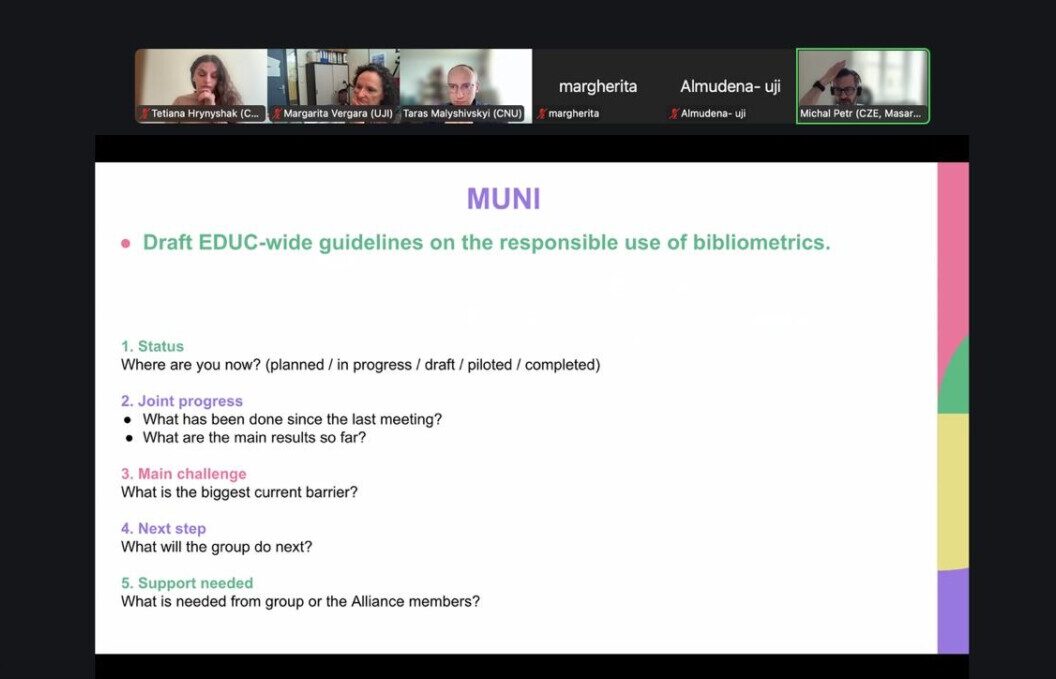
During the meeting, partners reviewed progress on both individual and joint tasks, focusing on:
integration of RRA principles into institutional practices;
development of policies and tools supporting responsible and fair research evaluation;
coordination of upcoming activities, including expert meetings and deliverables.

The discussion also highlighted the importance of continued alignment across institutions, ensuring that reforms are not only implemented locally but contribute to broader European and national policy developments.
Join a scientific event on the future of research and evaluation systems

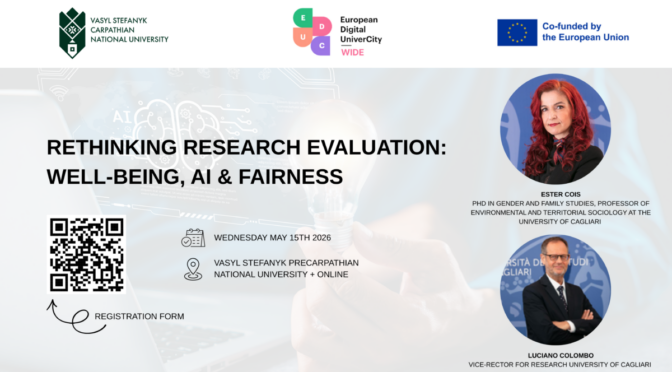
On May 15, the Carpathian National University named after Vasyl Stefanyk will host an international scientific event dedicated to rethinking approaches to research evaluation.

The event will bring together researchers, academic leaders, and international experts to discuss key challenges in modern science — from researchers’ well-being to the impact of artificial intelligence on evaluation systems.

The focus of the event includes three key directions.

Key speakers:

  • Ester Cois — lecture on researchers’ well-being and fair evaluation
  • Luciano Colombo — on the role of artificial intelligence in the future of research evaluation

The program features expert lectures and discussions, Q&A sessions, an interactive workshop “Redesign the Perfect Evaluation System”, networking, and exchange of experience.

We aim to bring together lecturers, researchers, and early-career scientists to discuss what the academic system of the future should look like — more human-centered, balanced, and innovative.

📍 Format: hybrid (offline + online)
👥 Target audience: researchers, lecturers, PhD students, and everyone involved in academia
💬 Languages: English / Ukrainian

Registration form: https://forms.gle/wgF3XXWU2BWYU3ZT7

University lecturers successfully completed an international internship at the University of Jaume I (Spain)


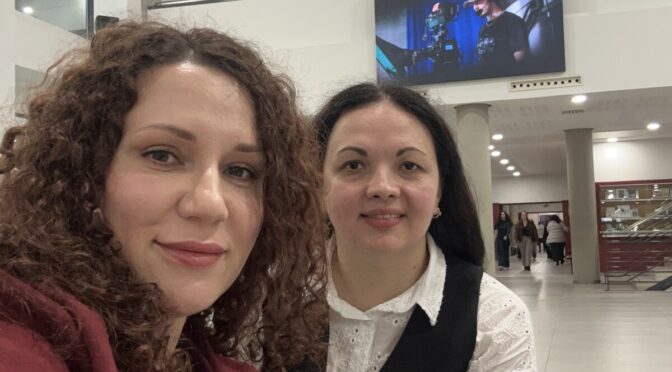
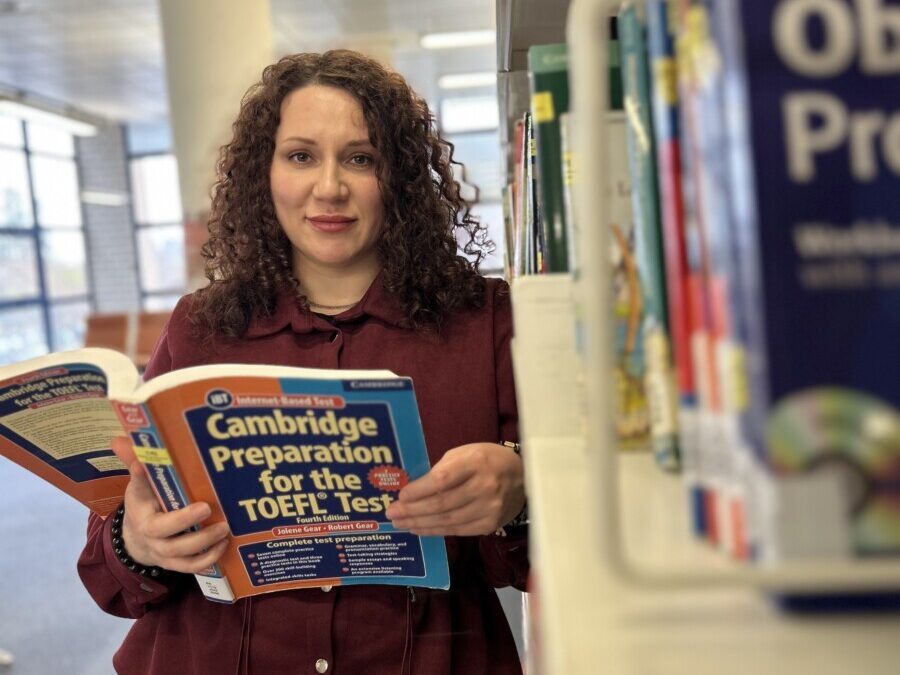
Associate Professors Iryna Matiash-Hnedyuk and Tetiana Hulyak of the Department of English Philology successfully completed an international internship at the University of Jaume I (Spain), which took place from March 2 to 29 as part of the EDUC-WIDE project (Expanding EDUC Opportunities for Inclusive ERA Development).

Iryna Matiash-Hnedyuk implemented the program “English Accents in the Spanish Classroom: Attitudes, Acquisition, and Academic Practices,” dedicated to issues of the perception of English accents in a Spanish-speaking educational environment, the specifics of their acquisition, and academic practices in English language teaching.

Tetyana Hulyak’s program, “Multimodal Approaches to SLA: From Usage-Based Theory to Digital Learning Environments,” is aimed at researching the impact of multimodal language input and digital technologies on second language acquisition processes.

The program mentors were leading scholars from the Department of English at Jaume I University: Professor Richard Nightingale and Professor Laura Portolés Falomir.

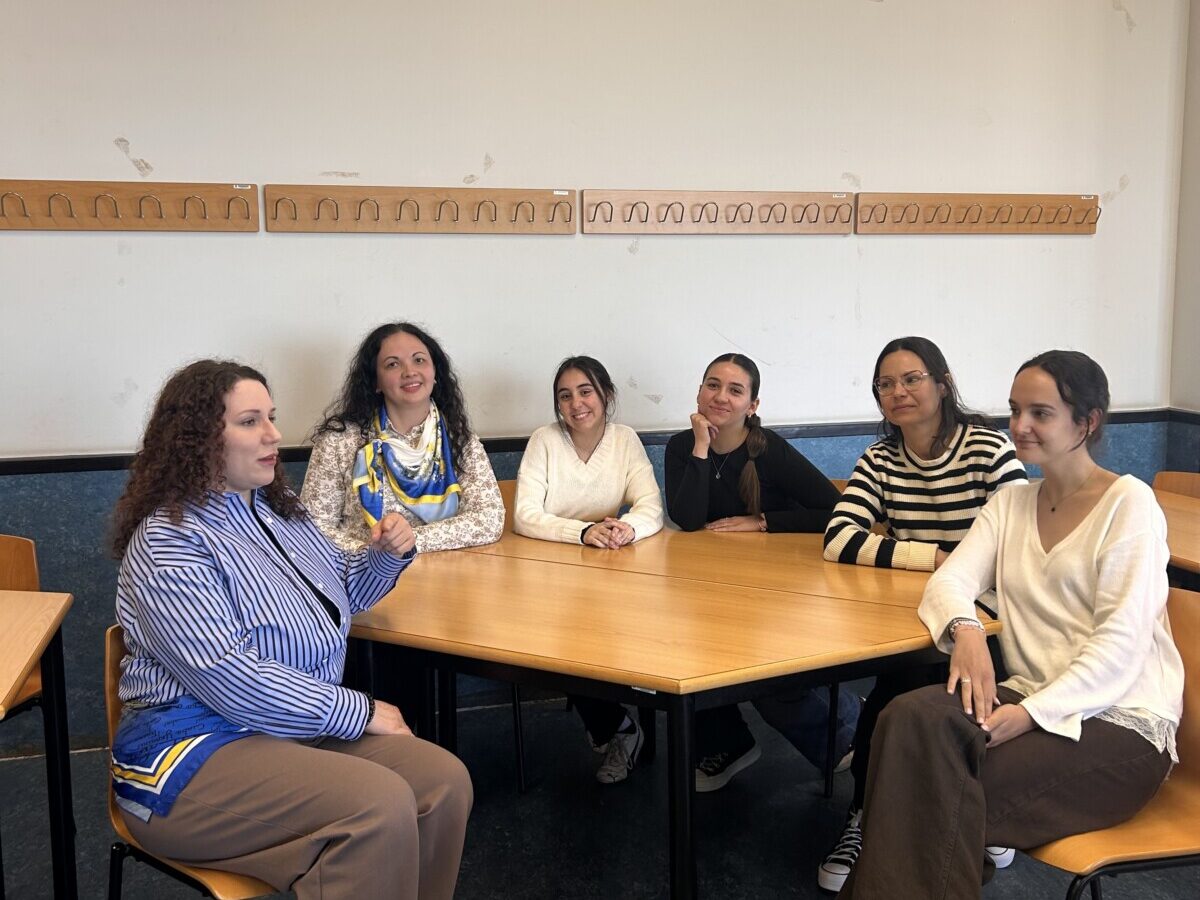
Interacting with Spanish colleagues, including Gema Gayete Dominguez, Maria Reyes Sayas Cano, Nerea Peraire Queral, and Andreea Izabela Gorgoteanu, helped them immerse themselves in the university ecosystem and try job shadowing.

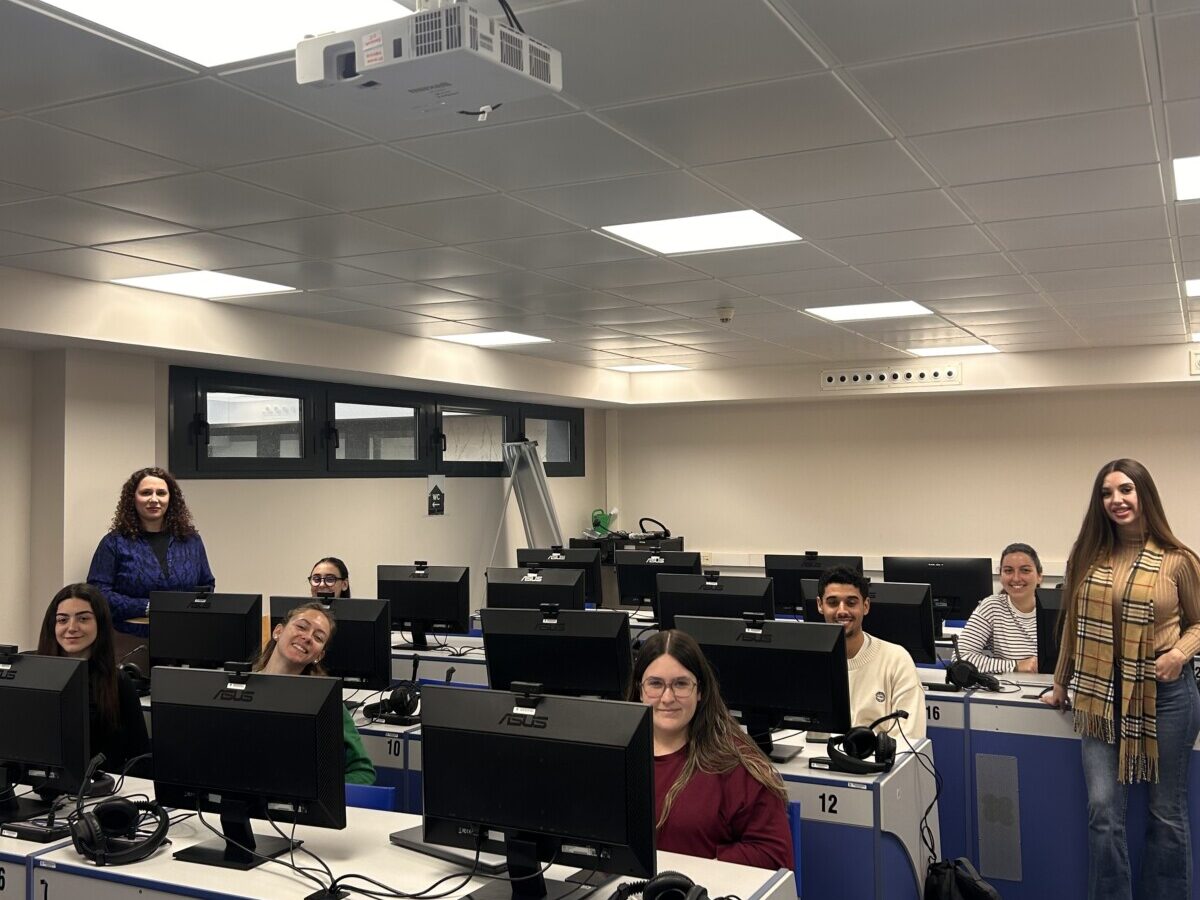
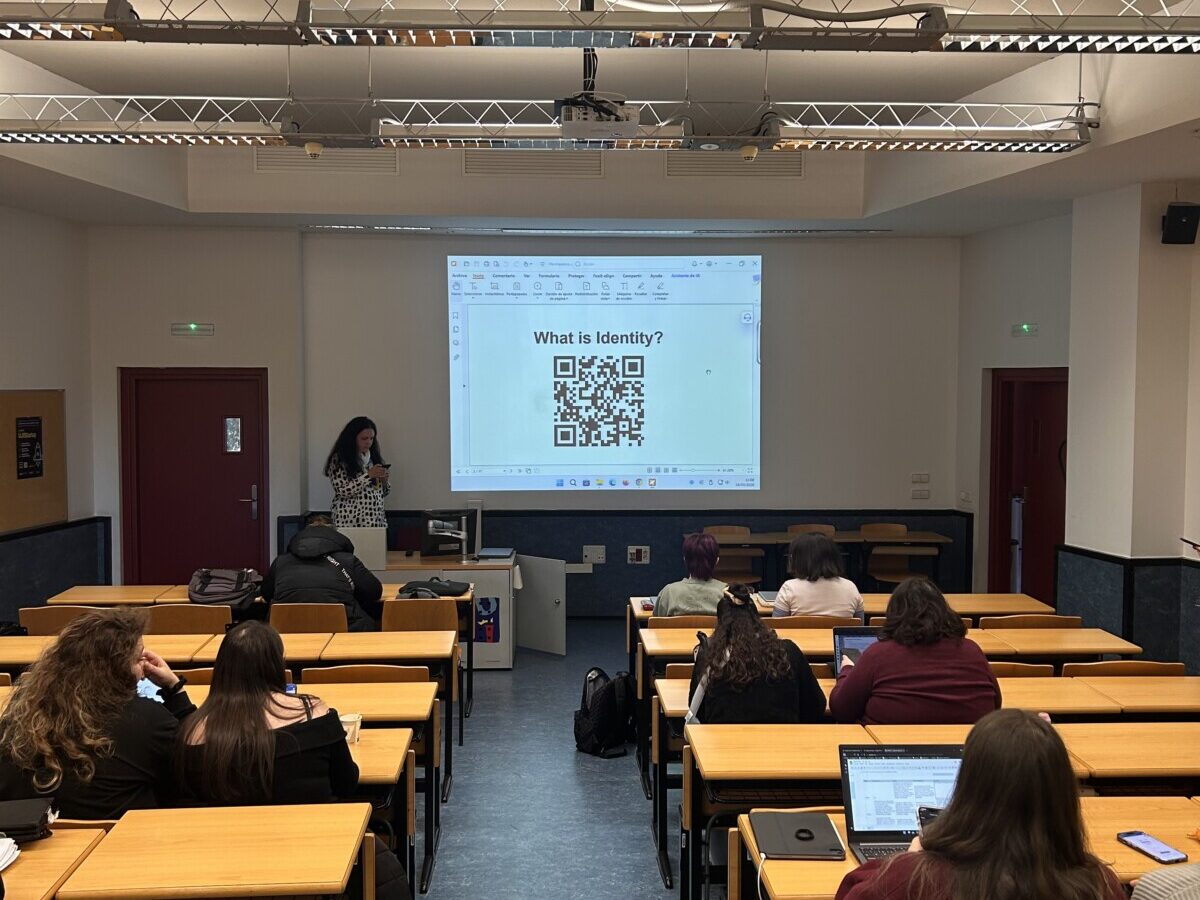
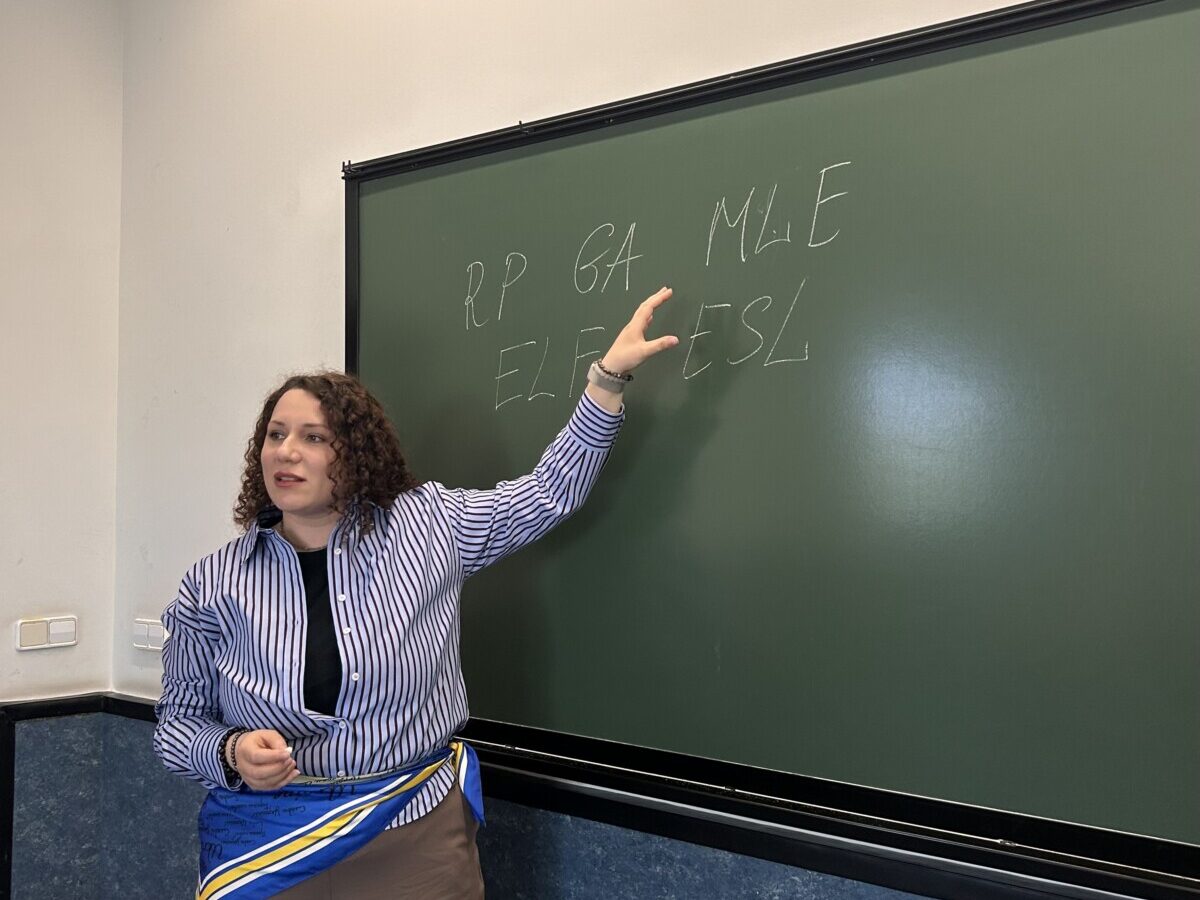
As part of the internship, our university’s faculty members delivered lectures and seminars for students, familiarized themselves with the organization of the educational process and teaching practices at Jaume I University, and collected empirical data for future research.

International academic mobility is an integral part of the development of a higher education institution and contributes to the implementation of innovative methods in the educational process and the deepening of academic partnerships.